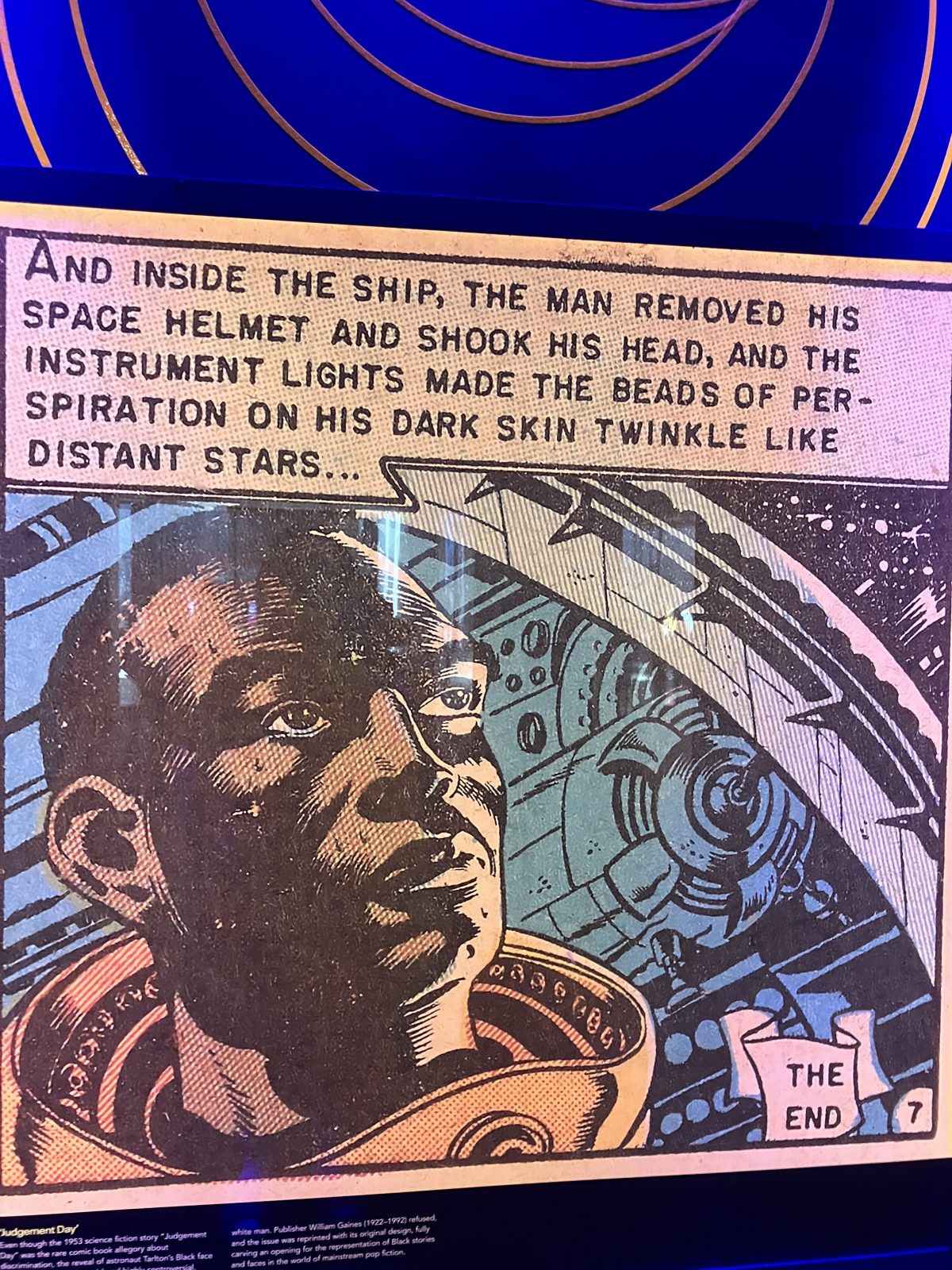
“I had to find another place where they hadn’t perceived black people to be, and that was on a spaceship.”
-George Clinton
Black people in American obviously have a deep and long history of subjugation and oppression, this is a truth that cannot be disputed in good faith. Over many centuries, it has been made clear that the African American identity is not one that has been allowed to be cultivated to the same extent as other racial groups in this country. Black identity mainly seems to be largely, and almost exclusively, associated with mainstream hip-hop culture which paints a picture of violence, crime, aggression, and abuse, be it of substances or other people. African Americans have existed in this country since before it was a united nation, helped to build it, contributed to its politic to astronomical extents, its literature, it’s economy, and its culture as well. Black people have touched every facet of this country in terms of influence and yet, the black identity is still not widely accepted and understood. Black people, despite trying to make this country home, have still been unable to properly acclimate and fit within the white narrative that the United States perpetuates. Putting their ideas into a box and limiting what the black mind, body, and soul is truly capable of. So eventually, the birth of an alternative was needed.
LITERARY ORIGINS OF AFROFUTURISM
While the term itself was coined by a white man in 1993, the origins of Afrofuturism predates its label by almost a full century.
The formation of Afrofuturism as an idea was ushered in by black authors in the real early 20th century with titles like One Of Blood by Paulin E. Hopkins in 1903 and The Comet by W.E.B. Du Bois in 1920, with more modern examples coming from authors like Octavia Butler and Samuel R. Delaney, known respectively as the mother and father of Afrofuturism. Octavia Butler wrote her stories around black women protagonists exploring elements of time travel and religion beyond the stars, addressing a demographic that was largely underrepresented and better representing the history that black peoples have faced. While Delaney focused more on the decolonialization and governmental factors of the genre, challenging social hierarchies and proposing multiple futures where black people stood on even footing with white people.

Octavia E. Butler’s Kindred (1979)
Mark Dery, the founder of the term, describes Afrofuturism in his 1993 essay, Black to the Future, as; “speculative fiction that treats African American themes and addresses African American concerns in the context of twentieth century technoculture.”
While I find this to be a rather simple definition, it is not incorrect. it is important to note that Afrofuturism is not exclusively based in science fiction, even though this is how it may seem. Afrofuturism is meant to showcase just that; black futures across all avenues.
While it is easy to view Afrofuturism as a nuanced form of science fiction, this would be an underrepresentation of the genre. The future of African Americans is also based in the future of culture, sexuality, gender, politic, etc.
Dery asks this question in his essay as well; “Can a community whose past has been deliberately rubbed out imagine possible futures?”
The easy answer to this question is absolutely. As a matter a fact, it is executed flawlessly by a myriad of artists and thinkers. This question highlights the importance of Afrofuturism, a hopeful, yet uncertain, future based on a nihilistic, equally uncertain, past.
AFROFUTURISM IN ART AND FASHION
Afro futurism finds itself manifesting in many different forms. Its like it demands for the brown-skinned to envision themselves outside of the box that they have been placed in, and desire far more than what even their oppressors have achieved.
The visual art of Afrofuturism is astonishing. It is inspired by many and has correspondingly inspired many as well. Loads of different African American creative minds have worked to make pieces that look far into the future of black influence and design. these kinds of works are just as important as the literature that parented these ideas because it gives bold and loud visuals to go along with the powerful sentiments that the genre represents.
Dery references Jean-Michel Basquiat’s piece, Molasses, by name and praises the depiction of the science fiction element.
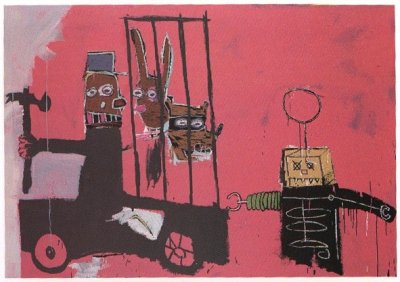
This piece, while obviously abstract in nature, gives the viewer a stimulation of recognition without explicit meaning. While the viewer is vaguely able to understand what is happening in the piece, one is still able to recognize what is there.
Basquiat, 1983
Another example of a bold Afrofuturist catalogue can be found within the pages of Milestone Comics. This black comic publishing company is responsible for many interesting, black characters, each with their own distinct beliefs and stories.
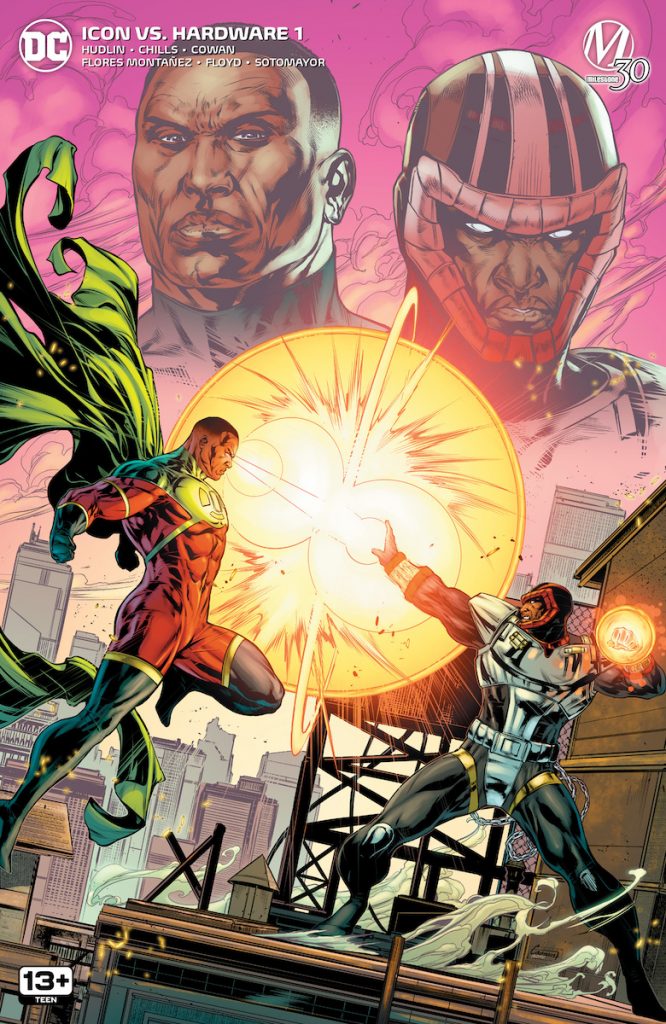
Milestone Comics’ Icon Vs Hardware details an action-packed conflict between two characters in the universe. Both of these characters are mentioned by name in Mark Dery’s Essay on Afrofuturism, with one of them hailing from the stars while the other uses the technological advancements of this world to arm himself.
From a fashion standpoint, Afrofuturism is bold, loud, abstract, and culturally driven by traditional African art and fashion. It uses intricate patterns, bright colors, and places emphasis on silhouettes.
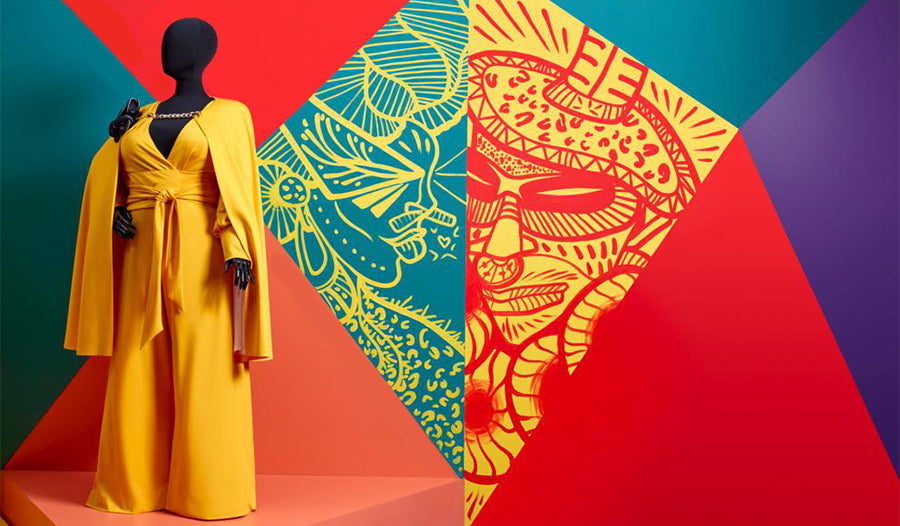
A piece from Ruth E. Carter‘s gallery
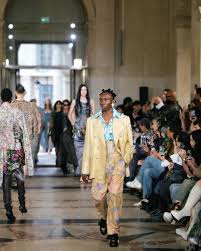
A piece from Virgil Abloh for a Vivienne Westwood fashion show
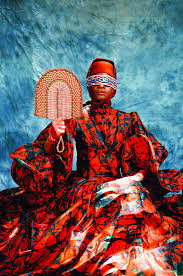
A model from the first Afrofuturist fashion showcase at Black New England Conference
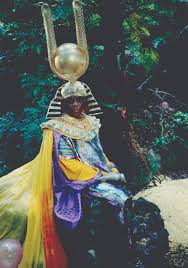
Renowned jazz musician, Sun Ra, known for intergalactic sound as well as his stellar fashion
AFROFUTURISM IN MUSIC
As stated before, Afrofuturism thrives and flourishes when interacting with the creative, open mind. Nothing proves this more than the broad and diverse music that such a genre hosts. From electronic to folk, Afrofuturist music is one of its strongest avenues. Many talented minds find themselves cultivating a sound which meshes both African American culture and high quality production, names like Janelle Monae, Erykah Badu, and Sun Ra come to mind.
Janelle Monae is a rapper and RnB singer songwriter whose career is based off of Afrofuturist themes and stories within her tracks. Since her second studio release, Metropolis: The Chase Suite (2007), Ms Monae has been painting stories of Androids in black peoples’ place. Her Albums have depicted grand stories of cybernetic, interracial, and freely queer romance, as well as suspense-driven, future religions and the occult, crafting a bizarre cosmology with her lyrics. Janelle Monae’s 2018 Album, Dirty Computer has found itself on the front page of The National African American History Museum Website.
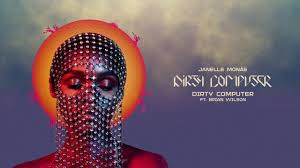
Cover Art for Janelle Monae’s 2018 release
Erykah Badu is a hip-hop, neosoul legend responsible for a plethora of recognizable songs and albums. Her influence through not only music, but fashion and black spirituality is unmatched. Erykah Badu exists within a genre known as Neosoul; a genre of hip-hop that is based heavily on black activism and strength as well as intellectualism. This genre is very verbal about the African American condition and seems to exist as a way to enlighten others of how black people in America are moving towards liberation. Ms Badu has released two consecutive and connected Afrofuturist albums; New Amerykah, pt 1(4th World War) and New Amerykah, pt 2(Return of the Ankh). Where the first album details a war on womanly sexuality and sexual freedom, and the second depicts her love for the womanly body and the divine feminine. Erykah Badu publicly follows a pro-black, organized belief of the Nation of Gods and Earths, founded in Harlem in 1964. This belief, not religion, is based on the teachings that black people were the original people and that within every melanated body lies great divinity. Believing that men are Gods and women are Earths.
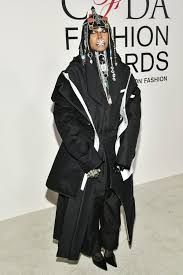
Erykah Badu winning CFDA fashion award in 2024
Sun Ra was a generational jazz keyboardist who forged his music around his interplanetary mythos and cosmic sound. Sun Ra accompanied his incredible music with mind-blowing visuals and performances, shaping black performance culture all throughout America. His influence on Afrofuturism cannot be undermined, as a matter of fact, its impossible to remove him from the discussion of its name. Sun Ra has multiple discographies under different stage names, each relating to the cosmos. Sun Ra has Albums like Space Is t=The Place where he claims to come from Saturn to offer black people a way to freedom from white oppression. After he forms his Intergalactic Solar Arkestra, these themes of space travel and a black future lying deep within the milky void is only pushed further with albums like Sun Ra and His Intergalactic Solar Arkestra, Omniverse, Media Dreams, Universe In Blue and unironically many, many more. Sun Ra also stood as a symbol for queer and nongender conforming groups. This is because of his free expression of gender-bending vanity, interpreted by some as alien drag, his 1926 song titled Queer Notions, and his famous asexuality. All of this mixed together with his experimental sound made him a strong symbol for crushing social norms and promoting an alternative to the status quo.
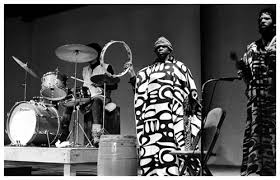
The Sun Ra performing with His Arkestra
A MEMO FROM WINSTON
I would say that Afrofuturism has played an incredibly large role in who I am as a person. The ability to dream of a world that is not tethered by chains or controlled by white hands is a beautiful idea to me. Thank you for listening!
SOURCES
Love, Tirhakah. “Science Fiction Visionary Samuel R. Delany on Music, Race and Memory.” Red Bull Music Academy Daily, 12 July 2019, daily.redbullmusicacademy.com/2019/07/samuel-delany-interview.
Hickman, S.C., et al. “Afrofuturism and the Diaspora.” The Dark Forest: Literature, Philosophy, and Digital Arts, 20 Nov. 2022, socialecologies.wordpress.com/2022/11/20/afrofuturism-and-the-diaspora/.
Dery, Mark. “‘black to the Future: Interviews with Samuel R. Delany, Greg Tate, and Tricia Rose’ (Flame Wars: The Discourse of Cyberculture, Ed. Mark Dery [Duke University Press, 1994].).” Academia.Edu, 25 June 2015, www.academia.edu/13287126/_Black_to_the_Future_Interviews_with_Samuel_R_Delany_Greg_Tate_and_Tricia_Rose_FLAME_WARS_THE_DISCOURSE_OF_CYBERCULTURE_ed_Mark_Dery_Duke_University_Press_1994_.
Gifford, Kaia. “Why Queer Afrofuturism Matters More than Ever in Film | by Kaia Gifford | Medium.” Medium, medium.com/@kaia.gifford/why-queer-afrofuturism-matters-more-than-ever-in-film-6a436209fcbc. Accessed 10 Dec. 2025.